
How much cleaning does a business really need? A practical guide for offices, medical practices and commercial premises
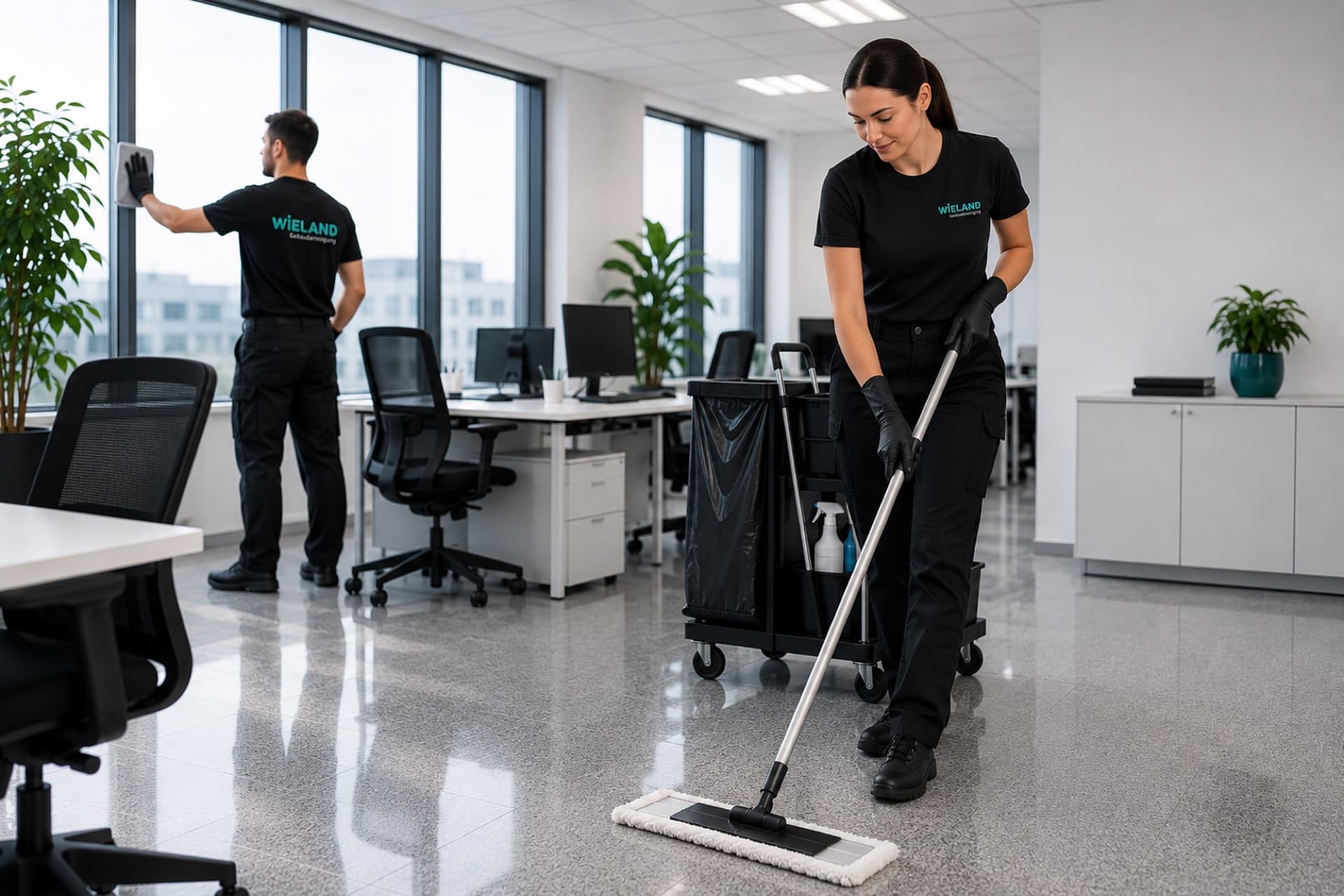
Clean premises are about more than appearances. Regular, professional cleaning helps staff feel comfortable, gives customers a positive impression and keeps buildings and furnishings well maintained over the long term.
But how often does an office actually need to be cleaned? Is once a week enough, or is daily cleaning necessary? And which areas should be cleaned particularly frequently?
The answer is that there is no one-size-fits-all cleaning schedule that works equally well for every business. Key factors include the size and use of the premises, the number of employees, the sector and visitor numbers.
Why a tailored cleaning schedule makes sense
An office with ten employees has different requirements from a practice with numerous visitors every day. A manufacturing business or public authority also needs a different cleaning plan from a small administrative office.
Cleaning should therefore always be tailored to the individual premises.
Important factors include:
- How many people use the premises each day?
- Which areas see particularly heavy use?
- Do customers or members of the public visit the premises?
- What hygiene requirements apply?
- What types of flooring and surfaces are present?
- How large are the areas to be cleaned?
- Are there any specific requirements for washrooms or kitchen areas?
A professional cleaning service therefore considers not just the floor area, but the premises as a whole.
What should be cleaned daily?
Many businesses have areas that need particular attention every day.
These include heavily used areas and touchpoints in particular.
Washrooms
Toilets, washbasins, taps and other washroom areas should be cleaned regularly and thoroughly. This is important not only for appearance, but above all for hygiene.
Floors
Dirt is brought into the premises from outside every day. Depending on the flooring and how it is used, daily cleaning or maintenance may therefore be advisable.
Kitchens and break areas
Worktops, tables, sinks and other frequently used areas should be cleaned regularly. Communal areas in particular are used by many people and therefore need special attention.
Frequently touched surfaces
Door handles, light switches, handrails and other touchpoints are touched by numerous people during the working day. These areas should also form part of a well-planned cleaning programme.
What does not need cleaning every day?
Not every surface needs to be cleaned at the same frequency.
Windows, cupboards, walls, ceilings and hard-to-access areas, for example, do not necessarily need to be cleaned daily. Longer intervals may be appropriate here.
The key is to create a cleaning schedule with different intervals.
For example, tasks can be divided into those carried out daily, weekly, monthly and annually or as required.
An example of an office cleaning schedule
A typical office could, for example, be cleaned according to the following schedule:
Daily:
- Clean sanitary facilities
- Clean floors
- Empty wastepaper bins and waste containers
- Clean kitchen and break areas
- Clean frequently used touchpoints
Weekly:
- more thorough cleaning of doors and frames
- Clean less heavily used areas
- additional care for specific surfaces
Monthly or as required:
- Clean hard-to-access areas
- more intensive care for specific floor areas
- Clean furniture and other surfaces
Several times a year:
- Window and glass cleaning
- Carpet cleaning or deep cleaning
- intensive care for floor coverings
- Clean hard-to-reach areas
This schedule is, of course, only an example. The actual intervals should always be tailored to the individual premises.
Office, practice or commercial premises: every property is different
A common mistake is to specify the same scope of cleaning for every business.
In fact, requirements vary considerably.
Office
In traditional office spaces, the main focus is on well-maintained workstations, clean floors, washrooms and communal areas.
Practice
Medical or therapeutic facilities may have stricter hygiene requirements. Cleaning routines and the methods used must be matched particularly carefully to the specific requirements.
Commercial and industrial premises
Commercial and industrial premises may be subject to additional types of dirt and soiling. Depending on the work carried out, production areas, storage areas or specialist flooring, for example, need to be taken into account.
The right approach to cleaning therefore always starts with an individual assessment of the premises.
Why “as cheap as possible” is not always the best solution
Price naturally plays a role when choosing a cleaning service provider. However, the decision should not be based solely on how little the cleaning costs.
What matters more is the balance between cleaning performance, reliability, quality and cost.
Cleaning too infrequently can actually lead to additional costs in the long term. Dirt can become ingrained, materials can suffer greater wear and more intensive deep cleaning may become necessary.
A well-planned cleaning programme can therefore help keep costs under better control over the long term while ensuring a consistently well-maintained appearance.
Regular cleaning also protects the value of your property
Cleanliness is often considered solely in terms of hygiene. However, professional cleaning can also help preserve the long-term value of floors, surfaces and furnishings.
Regular care prevents dirt from becoming ingrained and materials from suffering unnecessary wear.
Particularly with high-quality flooring, glass surfaces or delicate surfaces, it is therefore worth cleaning before dirt becomes clearly visible.
How do I find the right cleaning frequency?
The most important question is not:
“How often is an office normally cleaned?”
Instead:
“How often do our particular premises need cleaning?”
To answer this, usage, size, staff numbers, visitor footfall, sector and specific requirements should all be considered together.
A professional cleaning service can use this information to develop a tailored cleaning plan and determine which tasks should be carried out at which intervals.
Conclusion: cleanliness needs a systematic approach
A good cleaning plan does not mean cleaning as often as possible. It means cleaning the right areas at the right time using the appropriate methods.
While washrooms, floors and high-traffic areas often require regular cleaning, other tasks can be carried out less frequently.
The result is a cleaning plan that fits your business – not the other way round.
Wieland Gebäudereinigung stands for tailored cleaning solutions, reliable service and professional building cleaning. Using modern cleaning technology and an experienced team, we develop cleaning plans tailored to the requirements of each property.
Would you like to know what level of cleaning makes sense for your business?
Please get in touch. Together, we will review your requirements and develop a suitable cleaning plan for your premises.
Wieland Gebäudereinigung – clean, reliable and tailored to you.
Newsletter
Don't miss a thing
New articles and company news by email.